

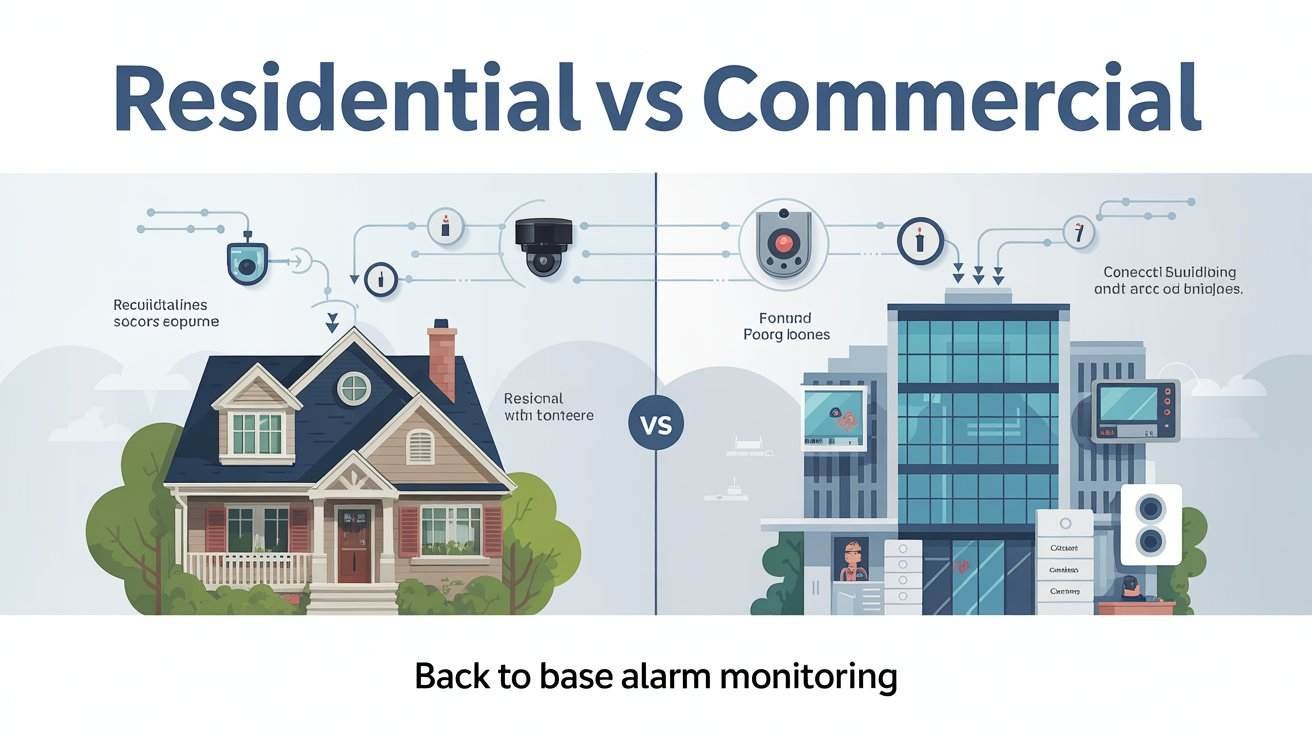
Security shapes modern life with quiet authority. It influences how people sleep, work, and relax. Back to base alarm monitoring stands as a silent guardian within this landscape. Many people assume these systems function the same everywhere, but that belief lacks accuracy and depth.
Residential monitoring and commercial monitoring differ in purpose, design, and execution.
These differences matter deeply in real situations. This article explores those differences with clarity, so stay till the end.
First things first—
Understanding Back to Base Alarm Monitoring
Back to base alarm monitoring refers to professional supervision of alarm systems. A monitoring centre receives alerts from protected premises, and trained operators respond according to predefined procedures. This response may include contacting owners or notifying emergency services.
The concept sounds simple at first glance. The application, though, varies widely between homes and businesses.
Core Purpose: Personal Safety Versus Operational Protection
Residential back to base alarm monitoring focuses on personal safety. It prioritises family protection and emotional reassurance, while also safeguarding personal property and cherished belongings.
Commercial back to base alarm monitoring, on the other hand, focuses on asset security. It prioritises continuity of operations and financial stability.
These distinct priorities shape every layer of system design.
Environmental Differences Between Homes and Businesses
Homes present intimate and personal environments that contain memories alongside material possessions. Alarm systems in residential settings reflect this reality. Sensors focus on doors and accessible windows. Motion detectors cover shared living spaces. Panic buttons often appear near bedrooms or living areas.
Commercial properties present complex and structured environments. They contain valuable equipment and sensitive data. So, alarm systems in these spaces operate with greater sophistication. Multiple zones divide large floor plans. Perimeter protection extends across loading bays and rooftops. Internal sensors monitor restricted or high-risk areas.
Scale and Zoning Complexity
Scale represents a major difference between residential and commercial monitoring.
A home usually contains a limited number of zones, while a business may contain dozens of monitored zones. Each zone carries a unique purpose and risk profile. Monitoring staff must understand these distinctions clearly.
So, accuracy becomes essential at every response stage.
Managing False Alarms Effectively
False alarm management reveals another key distinction.
Residential systems experience false alarms from pets or user error. That is why monitoring centres use verification calls to filter these events. Commercial systems, in contrast, require stricter controls and validation. Repeated false alarms can breach council regulations. Businesses may face fines or reduced response priority.
So, monitoring providers design commercial protocols with caution and precision.
Operating Hours and System Arming
Operating hours further separate these two worlds.
Homes operate on unpredictable schedules because people move freely throughout day and night. Businesses, however, follow structured and predictable timetables. Alarm systems arm and disarm according to shifts. Monitoring centres track these schedules closely, and any deviation triggers immediate investigation.
Risk Exposure and Impact Severity
Risk exposure varies dramatically between residential and commercial properties. A home burglary, for example, affects emotional wellbeing. But a commercial breach affects livelihoods and reputations, which can be far more serious.
So, alarm monitoring for businesses accounts for higher stakes. Response times become critical during such incidents. Coordination with emergency services becomes streamlined.
Technology Integration and System Capabilities
Technology integration differs between these environments. Residential systems often integrate with smart home devices. Mobile applications allow remote access and control because homeowners value convenience and simplicity.
Commercial systems integrate with access control platforms. CCTV networks feed live footage to monitoring centres. Audit trails support compliance and accountability.
Insurance and Compliance Considerations
Insurance considerations influence system configuration heavily.
Residential insurance policies may offer alarm-related discounts. Requirements remain relatively straightforward. Commercial insurance policies, as opposed to residential, impose strict technical conditions. These conditions include monitoring standards and documented response times.
Legal Responsibility and Duty of Care
Legal responsibility introduces another layer of difference.
Homeowners bear personal responsibility for system operation, but businesses carry duty of care obligations toward staff. So, alarm monitoring supports workplace safety compliance.
Duress alarms protect employees during high-risk situations. Monitoring operators follow protocols aligned with regulatory frameworks.
Training and Human Expertise
Training requirements reflect system complexity.
Residential monitoring staff require strong customer service skills. They must communicate calmly during distress. But commercial monitoring staff require advanced technical training. They must interpret layered alarm signals accurately and follow contractual instructions without deviation.
Maintenance and Testing Standards
Maintenance schedules also diverge significantly.
Residential systems undergo periodic servicing, as homeowners usually schedule annual inspections. Commercial systems, on the other hand, require frequent testing. Regulatory standards mandate regular system checks. Monitoring centres track maintenance compliance actively.
Cost Structures and Investment Value
Cost structures highlight practical differences.
Residential monitoring offers predictable pricing models, which suit household budgets comfortably. But commercial monitoring involves customised pricing structures that reflect system scale and service depth. Businesses view monitoring as operational investment.
Data Security and Reporting Expectations
Data security presents another dividing line.
Residential systems handle limited personal data, where commercial systems handle sensitive operational information. Monitoring providers implement robust cybersecurity measures in both the cases according to their level of importance.
Businesses, however, receive much more detailed incident reports than residentials. These reports support audits and insurance claims.
Conclusion
Residential and commercial back to base alarm monitoring share a name. They serve very different missions, and their design reflects those missions clearly. Their success depends on alignment with real needs.
Homes require warmth and simplicity, while businesses require structure and resilience. So, monitoring bridges risk with response effectively. Awareness leads to smarter protection decisions. Knowledge builds confidence and security.
If you need further clarity on your security needs, feel free to reach out to the team at Velox Security. You will find all the help you need with their support. Good luck.
Looking for more Article? Check out my website for the latest content.