

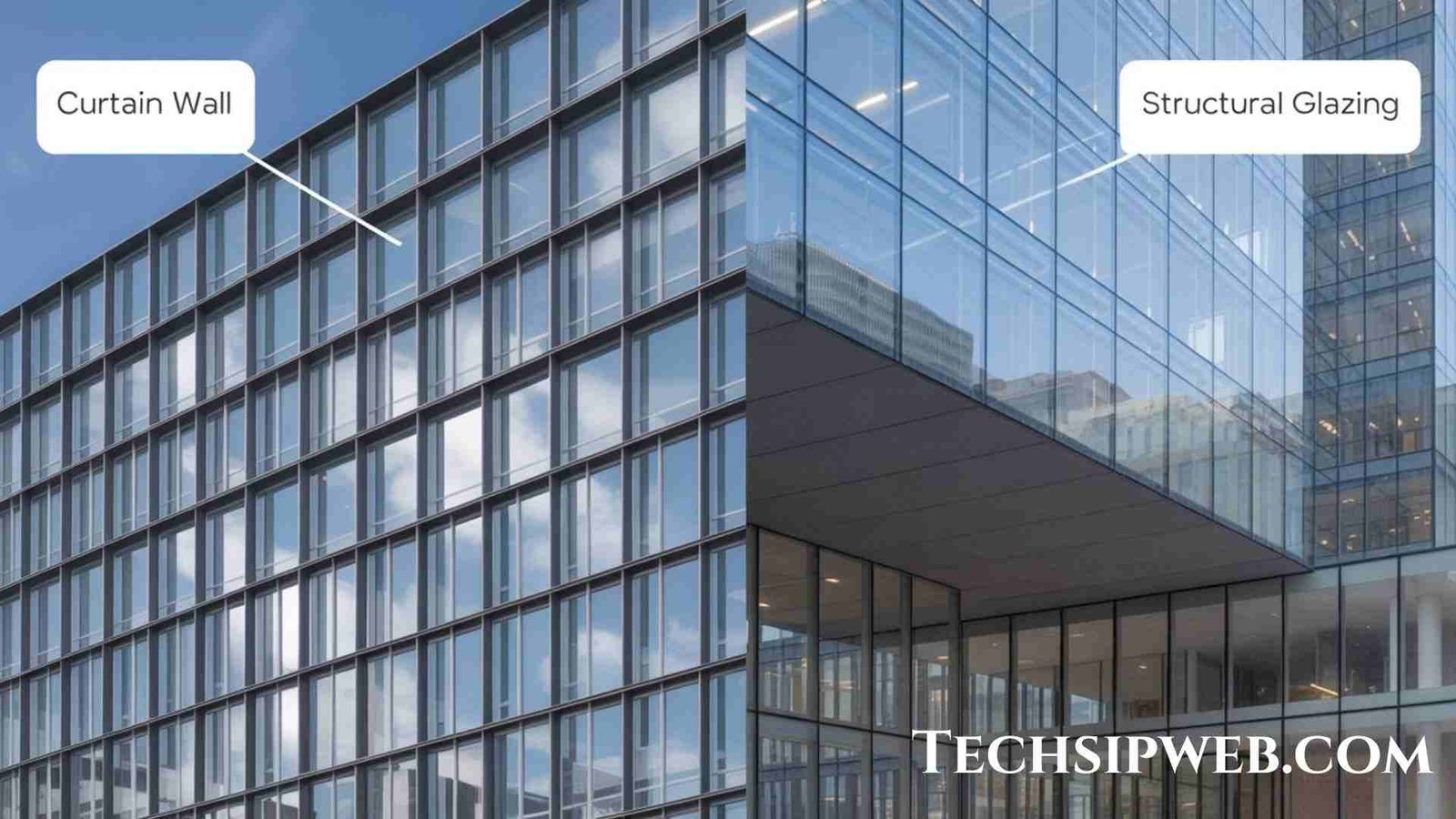
Modern buildings rely heavily on glass façades for style, energy efficiency, and natural light. Among the most popular systems, Curtain Walls and Structural Glazing stand out. Although they may look similar from outside, they are built differently and serve different architectural purposes.
In this upgraded guide, you’ll explore deeper insights, their working methods, types, installation procedures, cost factors, maintenance needs, and how to choose the best one for your project.
What Is a Curtain Wall?
A curtain wall is an exterior glass façade attached to the building’s structure. It does not hold any load except its own weight. Instead, it acts like a protective “skin” that shields the building from wind, rain, heat, and noise.
How Curtain Walls Work?
- Installed outside the structural frame
- Supported by brackets, transoms, and mullions
- Distributes wind load to the main structure
- Includes drainage systems for water control
Types of Curtain Walls
1. Stick System Curtain Wall
- Assembled on-site
- Flexible design
- Best for low to mid-rise buildings
2. Unitized Curtain Wall
- Prefabricated in factories
- Installed as complete units
- Faster construction
- Ideal for high-rise buildings
3. Semi-Unitized System
- Mix of factory-made units + on-site assembly
- Reduces labor and installation time
Advantages of Curtain Walls
- Strong structural performance
- Excellent weather resistance
- Improves building insulation
- Reduces energy bills
- Controls noise levels
- Long-lasting and durable
Disadvantages of Curtain Walls
- Higher cost due to aluminum framing
- Requires skilled installation
- Maintenance can be expensive
What Is Structural Glazing?
Structural glazing is a technique where glass panels are attached to a building using high-strength silicone sealants instead of metal frames. This creates a smooth, frameless, all-glass appearance, popular in modern architecture.
How Structural Glazing Works
- Glass is bonded using structural silicone
- Joints are sealed for water and air tightness
- Aluminum support frames are hidden behind the glass
- Creates a clean, uninterrupted glass façade
Types of Structural Glazing
1. Two-Sided Structural Glazing
- Two sides sealed with silicone
- Two sides supported by aluminum
2. Four-Sided Structural Glazing
- All glass sides sealed
- Fully frameless appearance
3. Spider Glazing
- Supported by spider fittings
- Used for entrances, lobbies, atriums
4. Bolted Glazing
- Glass fixed with bolts
- Strong and used in large glass walls
Advantages of Structural Glazing
- Frameless, seamless appearance
- Allows maximum natural light
- Lightweight and aesthetic
- Easy cleaning and maintenance
- Better visual appeal for showrooms
Disadvantages of Structural Glazing
- Lower structural strength compared to curtain walls
- Silicone joints require maintenance
- Not ideal for extremely tall buildings
Curtain Wall vs Structural Glazing: Deep Comparison
| Feature | Curtain Wall | Structural Glazing |
| Appearance | Visible aluminum frames | Smooth, frameless |
| Structural Strength | Strong and sturdy | Moderate strength |
| Resistance | High weather resistance | Good but depends on silicone quality |
| Cost | Higher | Moderate to lower |
| Installation Time | Faster with unitized system | Slower due to silicone curing |
| Building Type | High-rise towers | Mid-rise, showrooms, offices |
| Maintenance | Medium to high | Low to medium |
| Thermal Performance | Excellent insulation | Good insulation |
Cost Comparison
Curtain Wall Cost
Depends on:
- Type (stick/unitized)
- Aluminum profile thickness
- Glass type (double, triple, low-E)
- Installation complexity Approx. Cost Range: Medium to High
Structural Glazing Cost
Depends on:
- Silicone quality
- Fittings (spider, bolts)
- Glass thickness
Approx. Cost Range: Low to Medium Curtain walls cost more because of aluminum frames and complex engineering.
Installation Process
Curtain Wall Installation
- Measuring and designing
- Fabricating frames
- Installing vertical mullions
- Adding horizontal transoms
- Fitting glass panels
- Applying sealants
- Testing for air/water leakage
Structural Glazing Installation
- Preparation of aluminum frames
- Fixing frames inside
- Installing glass using structural silicone
- Waiting for silicone curing (24–48 hours)
- Final sealing and inspection
Energy Efficiency: Which Is Better?
Curtain Walls
- Better insulation
- Supports double/triple glazing
- Reduces heat transfer
Structural Glazing
- Good insulation with low-E glass
- More sunlight reduces energy use
Overall, curtain walls have better thermal performance.
Safety & Durability
Curtain Walls
- Stronger in high-wind areas
- Durable aluminum frames
- Suitable for skyscrapers
Structural Glazing
- Safe but dependent on silicone strength
- Works best for mid-rise buildings
Maintenance Tips
Curtain Walls
- Clean frames regularly
- Inspect sealants
- Check glazing gaskets
- Re-coat aluminum frames if needed
Structural Glazing
- Check silicone joints
- Clean glass frequently
- Inspect spider/bolt fittings
Which One Should You Choose? (Expert Recommendation)
Choose Curtain Wall if:
- You are building a high-rise
- You want excellent weather and noise protection
- You prefer a strong, durable façade
Choose Structural Glazing if:
- You want a frameless, modern look
- You prefer maximum visibility and natural light
- You are creating showrooms, lobbies, offices
Final Thoughts
Both systems are excellent choices for modern architecture. Curtain walls offer strength and durability, while structural glazing provides superior aesthetics and natural light. The right choice depends on your building height, budget, and design preferences.
If you choose wisely, your façade will not only look stunning but also improve energy efficiency and building performance.
Looking for more Article? Check out my website for the latest content.