

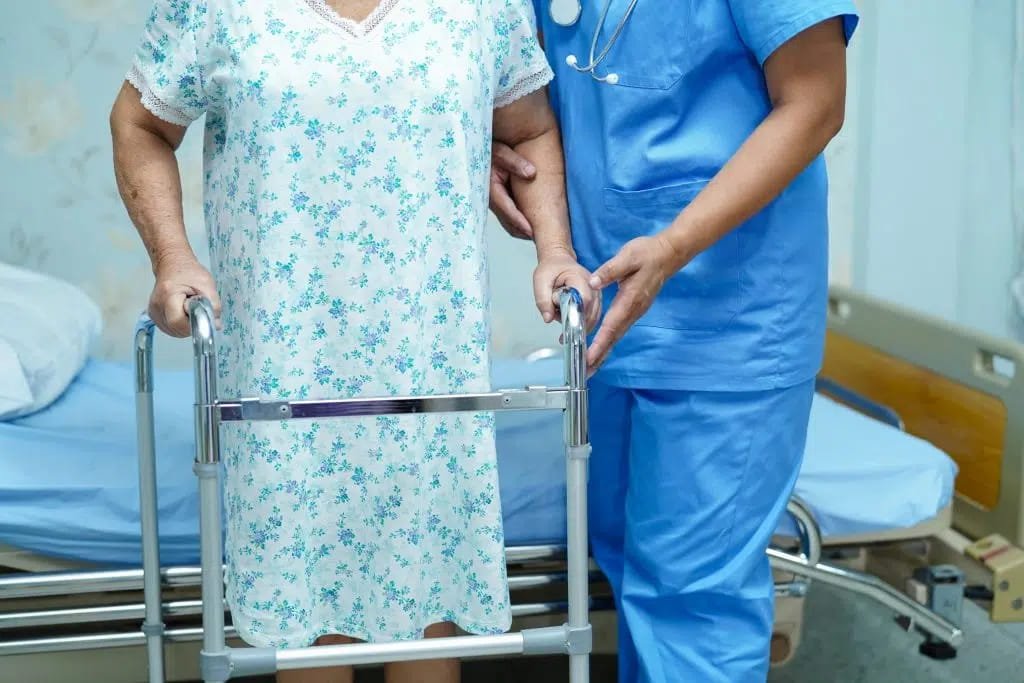
Most facilities don’t realise how much damage poor movement practices cause until something breaks. A staff member’s back. A resident’s confidence. A roster that suddenly has three empty shifts. It usually shows up as “one incident”, then another, then a pattern nobody quite wants to name.
That’s where patient handling stops being a technical phrase and starts being a daily reality.
In Australian hospitals, aged care homes, disability services, and community care settings, moving people safely is not a side task. It is the work. Transfers. Repositioning. Assisting someone up. Supporting them back down. Helping them turn. Helping them feel steady. All of it sits under patient handling, and when it’s done badly, the costs ripple quietly for years.
Not loudly. Not in one neat invoice. More in sick leave, stress claims, agency bills, turnover, lower care ratings, uneasy families, and staff who move a little more carefully than they used to. Sometimes out of professionalism. Sometimes out of fear.
This is where professional patient handling in Australia change the story. Not by selling equipment or dropping off a manual. But by stepping into the environment and rebuilding how movement actually happens.
The Costs Nobody Lists In The Budget
Most organisations can tell you exactly what they spend on hoists, slings, and training days. Fewer can tell you what poor patient handling has already cost them.
Back and shoulder injuries remain one of the most common reasons healthcare workers leave roles early. Not dramatically. Often quietly. Reduced hours. Role changes. Early exits from care work altogether. When that happens, facilities don’t just lose staff. They lose experience. Rhythm. Trust with residents. Team flow.
Then there are the indirect hits. Increased workers compensation premiums. More agency use. Less continuity. Lower morale. Higher supervision needs. Even reputation damage. Families notice when staff look rushed or strained. Residents notice when they feel unsafe being moved. Word travels fast in care communities.
And on the patient side, poor patient handling increases falls, skin injuries, fear-based resistance to movement, and longer recovery times. A person who feels unsafe being transferred starts declining assistance. That leads to more immobility. Which leads to more dependence. Which leads to more risk.
None of that sits neatly on a spreadsheet. But it shapes everything.
Why “We Do Manual Handling Training” Often Isn’t Enough
Many services genuinely try. They schedule annual refreshers. They print posters. They remind staff to bend their knees. And for a while, things improve.
Then workloads shift. New staff come in. Equipment gets moved. Residents’ conditions change. The environment changes, but the training doesn’t.
This is where professional patient handling services stand apart. They don’t work off generic slides. They assess real rooms, real beds, real behaviours, real limitations, real routines. They watch how staff move people at 6am, not how they demonstrate in a boardroom.
They redesign processes. Not just lifts, but communication, positioning, handover language, sequencing of care, space use. Small details that either protect bodies or slowly break them.
Good patient handling services don’t replace care teams. They strengthen them. They remove guesswork. They give staff permission to slow down. They build shared methods so everyone is moving the same way, not improvising under pressure.
And that consistency changes everything.
When Movement Becomes Part Of Care, Not A Risk To Survive
One of the quiet shifts professional patient handling services bring is this: movement stops being something to “get through” and starts becoming part of care quality.
Residents feel the difference. They’re supported, not dragged. Guided, not rushed. Spoken to, not repositioned like furniture. That changes trust. It reduces agitation. It increases cooperation. Which then makes every transfer safer for everyone.
Staff feel it too. Their bodies hurt less. Their confidence grows. New workers integrate faster. Experienced workers stop compensating with unsafe habits. Teams start using equipment properly instead of avoiding it because it “takes too long”.
That’s how good patient handling embeds itself. Not as a compliance exercise, but as culture.
The Compound Effect Facilities Underestimate
Here’s what rarely gets discussed. When patient handling improves, multiple things improve at once.
Injury rates drop. But so do medication errors, rushed care, emotional fatigue, and staff turnover. Why? Because physical strain amplifies everything. When bodies are overloaded, patience shortens. Focus narrows. Mistakes creep in.
Professional patient handling services relieve that strain. And when physical safety improves, psychological safety often follows. Staff communicate better. They ask for help sooner. They feel supported instead of blamed.
Facilities see smoother shifts. Fewer incidents. Better audit outcomes. Better family feedback. Better recruitment appeal. People want to work where their bodies last.
That compound effect is why organisations who invest properly in patient handling rarely go back. Once movement becomes safer, the entire environment feels different.
Where Professional Services Actually Make Their Impact
It’s not only in hospitals. Some of the biggest shifts happen in aged care homes, supported accommodation, mental health services, and community-based disability supports.
These settings deal with complex behaviours, cognitive decline, fluctuating mobility, and high emotional load. Patient handling here is rarely straightforward. It requires judgement, pacing, verbal de-escalation, dignity awareness, and physical technique all at once.
Professional services support this complexity. They tailor systems for dementia care. For bariatric needs. For neurological conditions. For post-surgical recovery. For long-term progressive disability.
They help teams plan ahead instead of reacting. They build individual handling profiles. They redesign spaces. They retrain leaders, not just front-line workers. They embed review cycles. They stay involved.
This is where patient handling becomes an ongoing partnership, not a one-off intervention.
The Long-Term Savings That Don’t Look Like Savings
Facilities often approach professional patient handling services thinking about compliance. Accreditation. Incident reduction. Insurance.
Those matter. But the bigger value sits elsewhere.
It sits in retention. In reputation. In reduced burnout. In stable rosters. In residents who stay mobile longer. In families who trust staff. In managers who spend less time firefighting and more time improving services.
It sits in the absence of problems. Which is hard to market. Hard to photograph. Hard to present in a board report. But deeply real.
Every avoided injury. Every prevented fall. Every staff member who lasts another five years. Every resident who keeps their confidence moving from bed to chair. That’s the quiet return professional patient handling brings.
Choosing Services, Not Solutions
One last thing that matters. Good patient handling from CHS Healthcare is not a product. It’s not a checklist. It’s not a one-size fix.
It’s a service. A relationship. A process that evolves as environments and people change.
The most effective providers don’t start with equipment. They start with listening. They watch. They ask. They learn the rhythms of the place. They notice what staff avoid. What residents fear. What corners get cut at 3pm when everyone’s tired.
Then they build systems that fit. Systems that protect bodies without slowing care. Systems that feel realistic. Human. Sustainable.
That’s when patient handling stops being a risk management category and starts becoming part of what quality care actually looks like.
And that’s when the quiet costs finally stop accumulating.
 Muhammad Awais
  khizar seo