

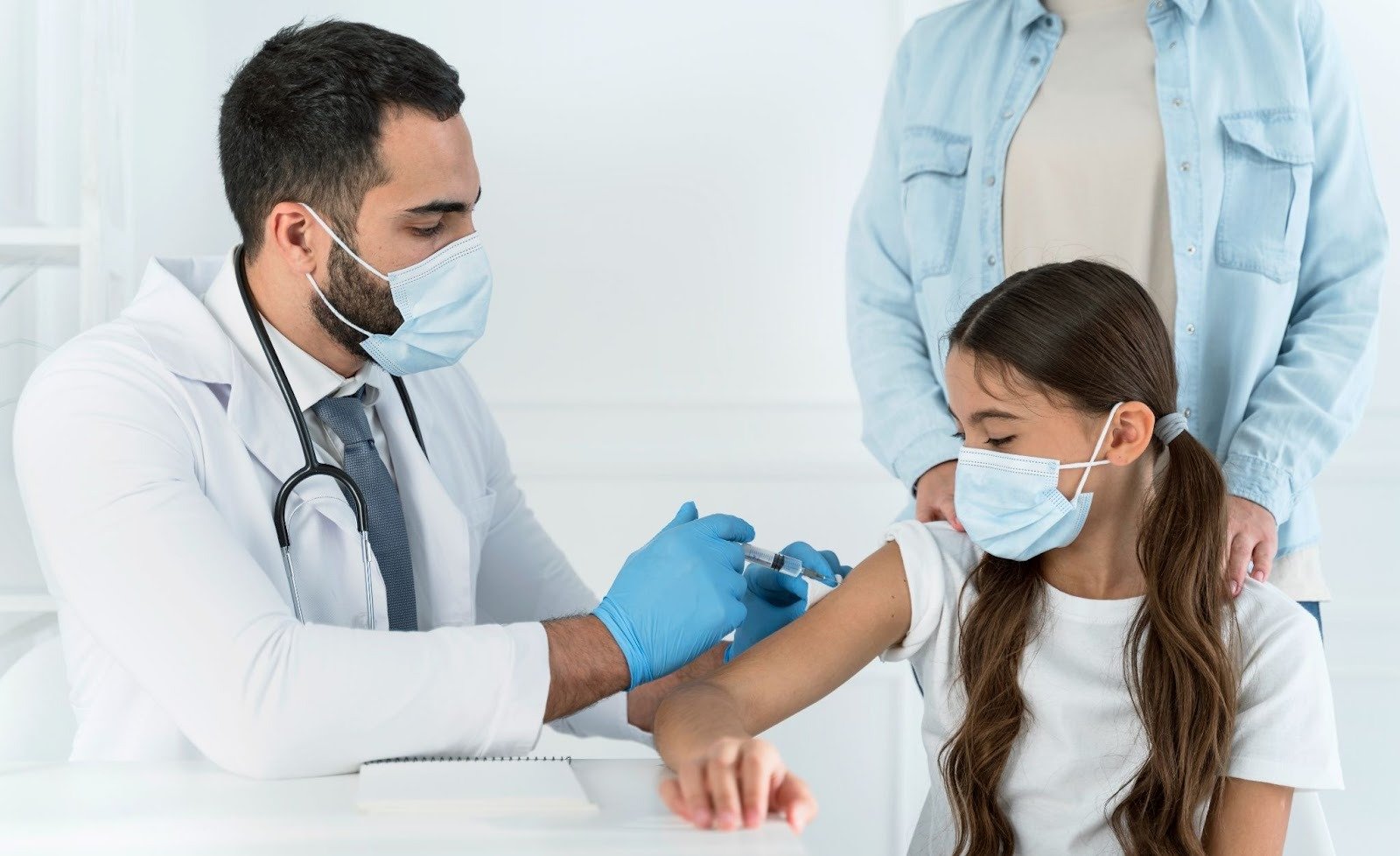
Middle school is a time when curiosity is high and young minds are open to new ideas. A medical camp gives students a chance to explore the world of healthcare in a fun, hands-on way. Instead of just reading about doctors and nurses, students can see how medical teams work, learn basic skills, and understand how the human body functions.
This early exposure helps build confidence, spark interest, and remove fear around medical settings. It also allows students to discover possible career paths before high school. When learning feels real and exciting, students are more likely to stay motivated and inspired.
Middle School as the “Goldilocks Zone” for Early Medical Exposure for Students
Forget the idea that middle school is just a holding pattern. These years are actually peak territory for skill acquisition. Programs like a well-structured medical camp can channel that learning momentum into hands-on experiences, helping students develop practical skills, scientific curiosity, and confidence during a stage when they are especially receptive to new challenges and real-world applications.
Brain Development and Learning Readiness
Executive functioning: think attention span, organizational capacity, grit, is exploding during this phase. Students can wrestle with complexity that would’ve overwhelmed them two years earlier, but they’re not yet crushed by the high-stakes pressure that dominates high school. They can handle structured lab work, diagnostic puzzles, and simulations that approximate real healthcare reasoning. Plus, failure still feels safe.
A seventh grader who botches a mock emergency scenario will shrug and ask for a do-over. A high school junior? That same mistake might confirm their worst fears about their abilities. This is also the developmental stage when young people construct “possible selves”, trying on future identities before stereotypes cement.
Research demonstrates that preliminary findings from five-day workshops on disease ecology at university-led camps increased students’ interest in science and health. That early push can fundamentally alter a student’s path.
Confidence Compounding Before High School Gatekeeping
Early victories with anatomy, emergency response basics, and laboratory reasoning dismantle the “I’m not cut out for science” story before it becomes permanent. Students who participate in middle school medical programs show up to ninth grade far more willing to enroll in advanced biology, chemistry, or health sciences electives.
They’ve already practiced medical terminology, handled diagnostic tools, and survived the initial intimidation of clinical equipment. That familiarity transforms into classroom participation and persistence when content gets challenging.
Equity Advantage, Access and Inspiration Earlier
Not every student grows up with a paramedic parent or a doctor next door. Structured exposure helps kids without healthcare family connections discover pathways that were previously invisible. It expands their mental map beyond “doctor” to include lab scientists, ultrasound technicians, respiratory therapists, and dozens of other professions. That broader understanding unlocks doors that might’ve remained shut forever.
Grasping when to introduce medical concepts is just the opening act. The real question is *what* students actually gain. Here’s how a thoughtfully designed camp converts developmental readiness into concrete, usable skills that extend far beyond typical summer programming.
Skill Gains from a Medical Camp for Middle School Students
Early medical exposure for students isn’t about churning out miniature physicians. It’s about cultivating foundational competencies that transfer across academic disciplines and real life.
Clinical Skills Foundations (Age-Appropriate, Safety-First)
Middle schoolers are fully capable of learning vital signs fundamentals, measuring pulse and respiration, understanding what normal ranges indicate conceptually. They practice first aid protocols: bleeding control, burn and sprain response, CPR awareness (conceptual understanding, not full certification). Hygiene and infection prevention labs use hands-on experiments to demonstrate pathogen transmission. We’re not talking invasive procedures here. Everything operates through supervised simulations with safe materials and crystal-clear boundaries.
Science and Lab Thinking That Translates to School Performance
Camps structured around observation → hypothesis → experimentation → reflection cycles teach scientific methodology through action, not lectures. Students manipulate anatomical models and digital platforms to investigate body systems. They work through mock medication calculations (unit conversion, ratios, label interpretation) that establish medical math literacy.
Research on first-year medical students revealed that 67% struggled with using academic resources, 56% with selecting main ideas, and 50% with concentration. Middle school represents the optimal time to build those study muscles gradually, before pressure intensifies.
Communication Skills That Mirror Real Healthcare Teamwork
Role-playing patient interviews teaches empathy, confidentiality awareness, and clear verbal communication. Students document findings, deliver presentations, and navigate disagreement in group scenarios. These interpersonal skills matter just as much as anatomical knowledge, and they’re nearly impossible to teach from a textbook alone.
Building clinical and communication competencies establishes the foundation, but students also need visibility into where these capabilities lead professionally. This is where career exploration converts abstract skills into tangible, realistic futures, illuminating pathways most middle schoolers (and their parents) have never encountered.
Realistic Healthcare Career Exploration Through Middle School Medical Programs
Career Map: Roles Students Rarely Hear About
Beyond the obvious “doctor” endpoint, there’s nursing, emergency medical services, physician assistants, respiratory therapy, radiologic technology, ultrasound technology, laboratory science, pharmacy, physical and occupational therapy, sports medicine, nutrition and dietetics, public health coordination, health informatics, biomedical engineering, and mental health professions.
A healthcare summer camp for kids can rotate through simulated departments, emergency triage, pediatrics, orthopedics, laboratory diagnostics, giving students genuine breadth.
“Day-in-the-Life” Immersion That Makes Careers Feel Attainable
Guest professionals delivering interactive demonstrations (stethoscope technique, ultrasound demonstration videos, protective equipment fitting) make abstract careers concrete. Students aren’t passively listening to job descriptions, they’re handling actual equipment and asking unscripted questions. That direct contact dismantles intimidation.
Pathway Clarity for Families (Without Overwhelm)
Parents often stress about next steps. Quality camps can map the sequence: middle school exploration → high school coursework → extracurricular involvement → postsecondary options. They also introduce alternative trajectories like community college routes, professional certifications, and allied health programs. Not every healthcare career requires medical school, and families desperately need that perspective early.
Understanding developmental advantages and career possibilities is valuable, but the critical question remains: how do you identify a program that actually delivers on these commitments safely and effectively? Use this parent-focused framework to distinguish high-caliber camps from expensive daycare with medical props.
Final Thoughts on Early Medical Exposure
Middle school is that rare developmental moment when curiosity still dominates self-doubt. It’s when one transformative week at camp can ignite a decade of sustained interest. A professionally designed medical camp for middle school students isn’t about creating pressure or forcing premature decisions.
It’s about offering kids a protected environment to explore, experiment, and envision themselves in professions they didn’t know existed. That early confidence multiplies over time. It surfaces later in course enrollment choices, college applications, and career persistence. The optimal time to begin? Right now, while the developmental window remains wide open.
Common Questions About Medical Camps for Middle Schoolers
Why are schools an ideal setting for health interventions?
K-12 schools are an ideal setting for community-based health interventions because they provide a unique opportunity for early learning and intervention. International research has shown that schools play a vital role in facilitating behavior change to prevent noncommunicable diseases.
Is a medical camp for middle school students worth it if my child isn’t “a science kid”?
Absolutely. Camps build confidence and self-efficacy, not just content knowledge. Plenty of students uncover genuine interest through experiential activities, even after struggling in conventional classroom settings. Early exposure can fundamentally shift self-perception before high school tracking constrains options.
What age is best for early medical exposure for students?
Ages 11-14 (grades 6-8) provide the optimal balance. Students possess sufficient developmental readiness for structured simulations, remain receptive to new identity possibilities, and face less academic stress than high schoolers. It’s early enough to influence trajectory without creating overwhelm.