

Most people remember the first time they moved to a lipo battery 6S setup.
The jump is noticeable. Motors sound different. Throttle response sharpens. Systems feel alive in a way lower-cell setups never quite matched. Whether it’s drones, RC cars, industrial rigs, surveying platforms, or custom electronics, 6S is often where performance stops being casual and starts becoming technical.
And that’s exactly where professional services quietly step in.
Once you’re working with 6S lipo batteries by RC Battery systems, you’re no longer just “using batteries.” You’re managing power environments. Load behaviour. Thermal stress. Discharge curves. Balance accuracy. Safety margins. And long-term reliability.
This is where service support becomes more important than the battery itself.
Why 6S Changes The Conversation
A lipo battery 6S configuration delivers serious voltage. That changes how entire systems behave.
Motors pull differently. ESCs run hotter. Wiring tolerances tighten. Charging routines become less forgiving. Storage conditions start to matter. Small mistakes stop being small.
At this level, performance gains also amplify risk. Over-discharge does more damage. Poor balance shortens life faster. Inadequate connectors heat more quickly. Physical damage becomes more dangerous.
This is why professional lipo battery 6S services focus less on “what brand” and more on how the battery is integrated, monitored, protected, and supported.
They treat 6S as an electrical system rather than a consumable.
The Hidden Workload Behind High-Power Reliability
When setups start failing, most people blame the battery.
In reality, many failures trace back to configuration, charging behaviour, environmental exposure, or mismatched components. This is the space where specialist services add their real value.
Professional lipo battery 6S providers test internal resistance. Verify cell balance. Analyse discharge data. Inspect connectors. Review charging logs. They assess whether packs are being stressed beyond their real operating envelope.
They don’t only replace packs. They stabilise systems.
This might look like recommending different charge rates. Adjusting cutoff thresholds. Changing connector types. Redesigning mounting. Improving cooling. Establishing rotation schedules. Implementing storage protocols.
None of that shows up on the packaging. But all of it decides how long a 6S system actually survives.
Why Serious Users Stop Managing Batteries Alone
There’s a point most high-power users reach where home setups stop scaling.
One or two packs can be charged on a desk. Ten packs start affecting schedules. Fifty packs affect workflow. Hundreds affect safety, compliance, and asset management.
This is where the lipo battery 6S services expand beyond supply.
They begin offering fleet testing. Capacity tracking. Performance grading. Lifecycle documentation. Storage solutions. Disposal programs. Transport compliance. On-site safety guidance. Failure analysis.
For commercial drone operators, survey teams, motorsport groups, industrial developers, and training organisations, this support becomes operational infrastructure.
Instead of reacting to failures, systems get maintained.
And that shift quietly protects productivity.
The Role Of Customisation In 6S Environments
Not all 6S lipo battery applications are built the same way.
Some need burst output. Some need endurance. Some operate in heat. Some in cold. Some experience vibration. Some stay stationary. Some cycle heavily. Some sit stored for months.
Professional services work inside those differences.
They configure packs. Select cell chemistries. Design housings. Match discharge profiles. Build redundancy. Integrate monitoring systems. Advice on protective hardware. Support certification where required.
This is especially important in commercial and research environments where generic packs underperform.
Customised lipo battery 6S services don’t just meet power needs. They shape reliability, maintenance load, and operational risk.
Safety Is Not A Feature. It’s A Service Process
Anyone who’s spent time around high-capacity lithium systems knows that safety lives in behaviour, not in labels.
The safest lipo battery 6S environments are built through systems.
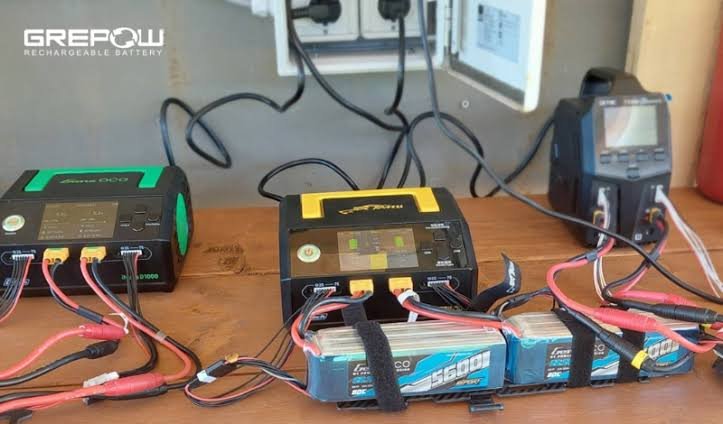
Charging stations that isolate risk. Storage solutions that control temperature. Transport procedures that limit damage. Inspection routines that catch early degradation. Documentation that tracks history.
Professional services design and maintain these systems.
They train teams. They audit setups. They advise on regulations. They implement incident protocols. They establish disposal pathways.
Because with 6S power levels, safety can’t be optional or informal.
And the best providers don’t wait for incidents to introduce it.
Where Professional Support Quietly Saves Money
On paper, service support looks like an added cost.
In practice, it often removes the most expensive problems.
Early degradation caught through testing prevents cascading failures. Proper charging protocols extend pack life. Correct configuration reduces thermal stress. Rotation systems prevent deep depletion. Storage management avoids swelling and capacity loss.
Over time, professional lipo battery 6S services reduce replacement rates. Downtime. Emergency purchases. Equipment damage. Project delays.
The savings rarely appear in one line item. They appear in smoother operations.
And for businesses running power-dense systems, smooth operations are where margins actually live.
When Performance Depends On Consistency
High-power setups don’t only need strength. They need predictability.
Voltage sag affects flight controllers. Imbalance affects sensors. Temperature affects output. Degradation affects timing. All of which affect outcomes.
Professional lipo battery 6S services aim for consistency.
Packs are grouped. Performance is logged. Age is tracked. Behaviour is monitored. Deviations are flagged early. Components are retired before they become problems.
This consistency is what allows advanced users to push systems confidently.
Not because the batteries are “stronger.” Because the environment around them is controlled.
The Service Layer Most People Never See
From the outside, the lipo battery 6S services look simple. Supply. Charging. Maybe repairs.
Behind that sits a lot of invisible work.
Testing equipment calibration. Storage compliance. Hazard protocols. Technician training. Data systems. Quality control. Disposal partnerships. Insurance requirements. Transport guidelines.
This layer is what allows high-power users to focus on what they actually do. Flying. Racing. Building. Surveying. Developing. Teaching.
And it’s what separates hobby-level use from professional power environments.
Who Relies Most On 6S Service Support?
Commercial drone operators. Agricultural and mapping services. FPV training centres. Industrial prototype labs. Robotics developers. Motorsports teams. Defence and research groups. Education facilities.
All of them use a 6S lipo battery because of what it enables.
And all of them rely on service providers to make that power stable.
Because in professional contexts, batteries aren’t accessories. They’re operational assets.
Choosing Services, Not Just Suppliers
The strongest lipo battery 6S environments are built with partners, not shops.
Providers like RC Battery who ask how systems are used. How often they cycle. Where they’re stored. Who handles them. What failures have occurred. What future loads look like.
They don’t just deliver packs. They design support.
And over time, that support becomes as important as the cells themselves.
Because once you work at 6S levels, performance is no longer about how much power you have.
It’s about how well you manage it.
 Muhammad Awais
  khizar seo