
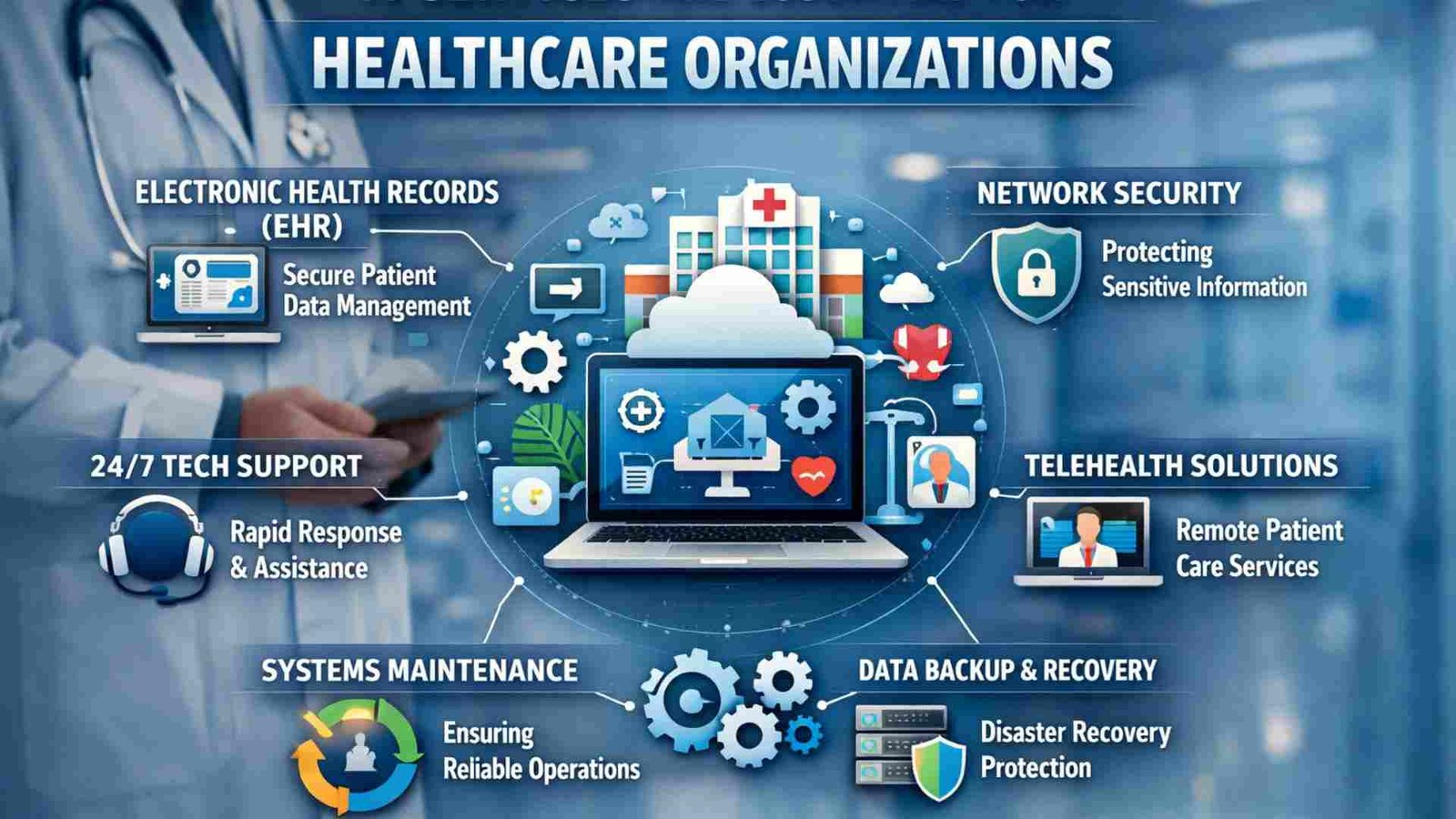
Healthcare organizations today rely heavily on digital systems to manage patient records, appointments, billing, diagnostics, and communication. From electronic health records (EHR) to telemedicine platforms and connected medical devices, technology plays a central role in modern patient care.
However, with digital transformation comes serious risk. Cyberattacks against hospitals and clinics are increasing every year. In 2026, healthcare remains one of the most targeted industries due to the high value of patient data.
This is where managed IT services for healthcare become not just helpful but essential.
The Growing Cybersecurity Threat in Healthcare
Healthcare data is extremely valuable on the black market. A single compromised patient record can include:
- Full name and address
- Social security or identification numbers
- Insurance details
- Medical history
- Payment information
Because of this, cybercriminals frequently target:
- Hospitals
- Private clinics
- Dental practices
- Diagnostic labs
- Long-term care facilities
Common threats include:
- Ransomware attacks
- Phishing scams
- Insider data leaks
- Medical device vulnerabilities
- Cloud misconfigurations
A single breach can shut down operations for days and cost millions in recovery and penalties.
Compliance Challenges in Regulated Healthcare Environments
Healthcare organizations must comply with strict regulations such as HIPAA and other data protection frameworks. Failing to meet compliance standards can result in heavy fines and reputational damage.
Compliance requires:
- Secure data encryption
- Access control systems
- Regular security audits
- Risk assessments
- Network monitoring
- Backup and disaster recovery planning
Most small and mid-sized healthcare providers do not have the internal resources to manage these requirements effectively.
That’s why many regulated businesses partner with specialists in managed IT and cybersecurity solutions tailored for healthcare environments.
What Are Managed IT Services for Healthcare?
Managed IT services provide ongoing technical support, monitoring, cybersecurity protection, and compliance management for healthcare organizations.
Instead of hiring a large in-house IT team, healthcare providers work with external experts who proactively manage:
- Network infrastructure
- Data security
- Cloud systems
- Endpoint protection
- Backup solutions
- Regulatory compliance
This proactive approach helps prevent issues before they disrupt patient care.
Organizations looking for reliable and compliant technology solutions often explore professional managed IT services for healthcare from experienced providers such as Compuwork, which focuses on supporting regulated industries with secure and scalable IT systems.
Key Benefits of Managed IT Services in Healthcare
1. 24/7 Network Monitoring
Healthcare operations never truly stop. Around-the-clock monitoring ensures threats are detected and resolved immediately.
2. Protection Against Ransomware
Proactive security systems reduce the risk of ransomware attacks that can shut down hospitals.
3. Improved Patient Data Security
Advanced cybersecurity tools protect sensitive patient information from unauthorized access.
4. Regulatory Compliance Support
Experienced providers understand healthcare regulations and help maintain continuous compliance.
5. Reduced Downtime
Fast response times and preventive maintenance keep systems running smoothly.
6. Cost Efficiency
Outsourcing IT management is often more affordable than maintaining a full in-house department.
The Future of Healthcare IT Security
As telehealth expands and connected medical devices become more common, the healthcare attack surface continues to grow. AI-powered threats and sophisticated hacking techniques make traditional security methods insufficient.
Healthcare organizations must shift from reactive IT support to proactive cybersecurity management.
Investing in specialized managed IT services ensures that patient care remains uninterrupted, data stays protected, and regulatory requirements are met.
Final Thoughts
Technology is transforming healthcare but it also introduces serious risks. Cybersecurity threats, compliance obligations, and system downtime can all negatively impact patient care and operational efficiency.
For modern healthcare organizations, partnering with an experienced managed IT provider is no longer optional — it is a strategic necessity.
By implementing secure, compliant, and proactive IT management solutions, healthcare providers can focus on what truly matters: delivering safe and effective patient care.