

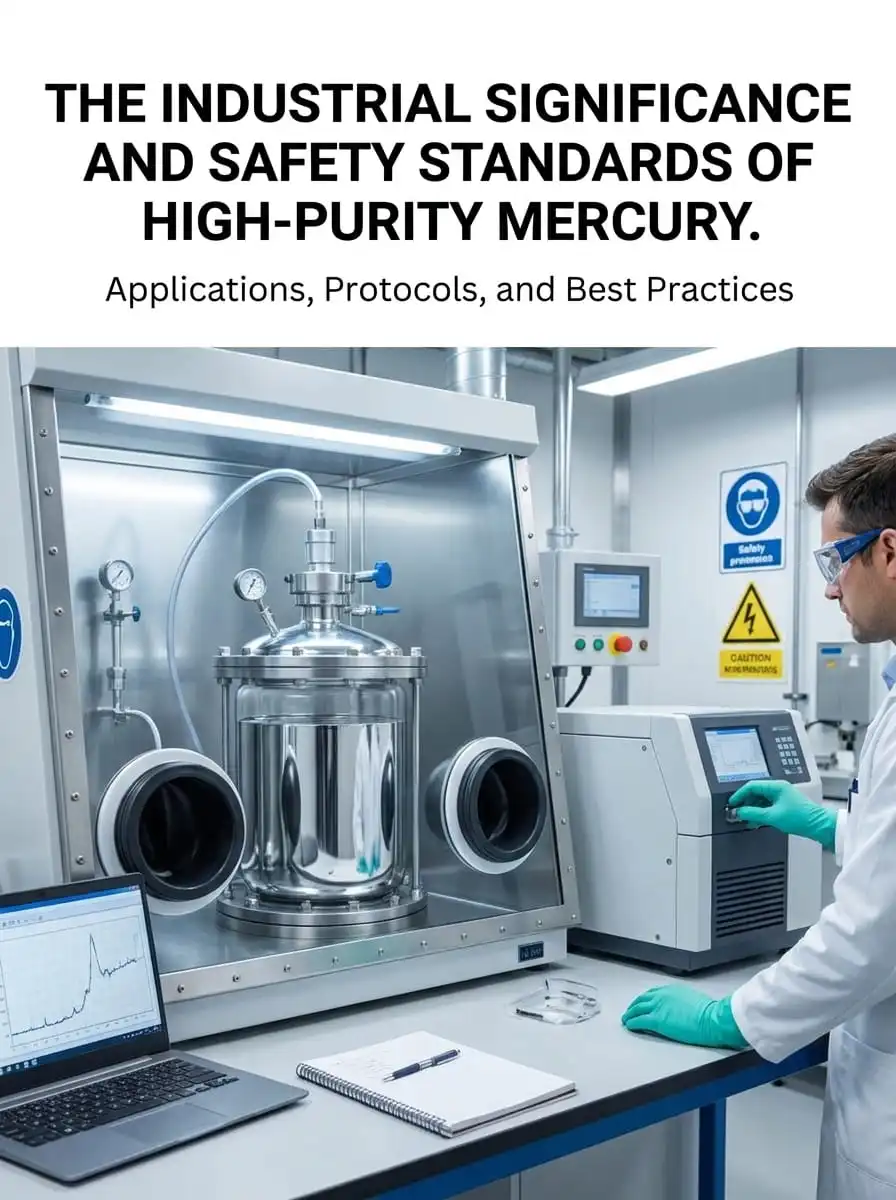
In my experience working across global, chemical, and industrial setups, I’ve seen how sectors rely heavily on the availability of high purity elements to drive innovation in electronics, mining, and specialized laboratory research, where mercury remains a unique and technically demanding part of substances we must carefully manage, it is widely known for its liquid state at room temperature and high electrical conductivity, making it a critical component in various high-tech applications, yet the procurement process is tightly governed by strict international regulations and safety protocols, so any facility looking to procure specialized variants or standard grades must focus on understanding chemical properties along with logistical requirements for safe transport, which I’ve found is paramount for maintaining a secure and compliant operational environment.
The Physical Properties and Industrial Applications of Liquid Mercury
From my hands-on work in labs, the first thing people usually focus on is the need to buy silver liquid mercury 99.99 pure, because the demand for such variants is particularly high in the scientific community, where accuracy of sensitive measuring instruments depends on the purity of the medium; many laboratories secure reliable supplies and search for specific grades with the clear intent to ensure their experiments stay free from contaminants that could skew data, since this level is essential for calibration, especially in diffusion pumps where a strong vacuum is required under controlled conditions of temperature and pressure.
At the same time, understanding the nature of Mercury, also called hydrargyrum, helps explain why it is a dense, silvery white metal in liquid form at standard settings, with high surface tension and the ability to form amalgams with other metals, making it indispensable in several industrial processes, it was historically used in thermometers, barometers, and complex electrical switches as well as fluorescent lighting, while in modern chemistry, high purity mercury is utilized as a catalyst in chemical synthesis and as a key component in the production of chlorine and caustic soda, showing how deeply its properties connect science with real world applications.
Understanding the Myth and Reality of Specialized Mercury Variants
In my experience dealing with niche supply chains, many people come across listings to Order Red Liquid Mercury Online, especially in online marketplaces, where the world of rare chemicals and industrial materials has generated a lot of speculation and misinformation around this substance, in simple terms, from a strictly scientific and chemical standpoint, what is often called red liquid mercury is usually linked to mercury(II) iodide or oxide, which may present reddish forms but are actually solid compounds rather than a true elemental metal, even though the term has persisted across various circles and is often associated with advanced nuclear technologies or high-power electronics.
Because of the specialized nature of such discussions, it is common to see entities attempting to source it for specific research or proprietary applications, but it is critical for procurement officers and researchers to verify the actual composition and legitimate intended use of any substance labeled this way, in many cases, these inquiries are directed toward complex manufacturing needs and must be handled within a proper framework of legal trade, safety, and compliance to avoid significant risks from counterfeit or hazardous materials.
Safety Protocols and Environmental Regulations
Given its toxicity, the handling and transportation of liquid mercury are subject to the Minamata Convention on Mercury, a global treaty designed to protect human health and the environment from anthropogenic emissions and releases of mercury and mercury compounds. Any organization involved in the purchase or use of mercury must adhere to rigorous safety standards. This includes the use of specialized secondary containment systems, vapor suppressants, and strict personal protective equipment (PPE) for all personnel involved in the handling process.
The environmental impact of a mercury spill is profound, as the element can undergo methylation in aquatic environments, becoming methylmercury, which bioaccumulates in the food chain. Therefore, the logistical chain for those who need to secure high-purity elemental supplies must be thoroughly vetted. Only licensed distributors with proven safety records should be utilized, ensuring that the material is shipped in UN-approved containers with all necessary hazardous material documentation and emergency response instructions clearly visible.
Technical Specifications and Purity Verification
In industrial applications, “purity” is not just a marketing term; it is a technical specification that dictates the performance of a system. For instance, the 99.99% purity grade, often referred to as “four nines,” indicates that the total metallic impurities are less than 0.01%. Achieving this level of refinement requires multiple stages of distillation and chemical treatment to remove traces of lead, zinc, and iron.
When a facility decides to buy silver liquid mercury 99.99 pure, they must request a Certificate of Analysis (CoA) that details the specific impurities present in the batch. This document is the cornerstone of quality control, ensuring that the material will not react unexpectedly with other components in a chemical reactor or an electrical system. Without these verified specifications, the risk of equipment failure or contaminated end-products increases significantly, highlighting the importance of working with suppliers who prioritize transparency and metrological accuracy.
The Future of Mercury in Sustainable Technology
As the world moves toward more sustainable industrial practices, the use of mercury is being phased out in many traditional applications in favor of safer alternatives. However, it remains a “material of necessity” in certain high-tech sectors where no viable alternative currently exists. Research is ongoing into the development of closed-loop systems that allow for the use of mercury without the risk of environmental release.
These advancements depend on the availability of reliable, high-purity stock for testing and implementation. The procurement of mercury is no longer a simple transaction; it is a complex process that involves legal due diligence, environmental responsibility, and technical expertise. By understanding the chemical nature of the material and the regulatory landscape surrounding its trade, industrial users can continue to utilize this unique element safely and effectively to drive the next generation of scientific discovery.
Legal and Ethical Procurement Practices
The trade of mercury is heavily scrutinized by government agencies such as the EPA in the United States and similar bodies globally. Procurement teams must ensure that their activities do not inadvertently support illegal mining operations or unregulated trade, which often have devastating social and environmental consequences. Ethical sourcing involves verifying the origin of the mercury and ensuring that the seller complies with all international trade laws.
Furthermore, the disposal of spent mercury or contaminated equipment must be handled by certified hazardous waste management firms. The lifecycle of mercury in an industrial setting is a cradle-to-grave responsibility. From the initial order to the final disposal, every step must be documented and executed with the highest level of professional care. This comprehensive approach to material management is what defines a responsible industrial operation in 2026, where the focus has shifted from mere production to sustainable and ethical stewardship of the earth’s most challenging elements.
Conclusion: The Importance of Professionalism in Material Sourcing
In conclusion, while the industrial and scientific demand for mercury and its compounds remains a reality, it must be balanced with an unwavering commitment to safety and legality. The pursuit of specialized chemicals, whether standard high-purity grades or more elusive variants, requires a sophisticated understanding of chemistry and logistics. By following established protocols, verifying purity through rigorous testing, and strictly adhering to global environmental treaties, the industry can ensure that it continues to innovate while protecting the planet and human health for future generations. Success in this field is found at the intersection of technical precision and ethical responsibility.